
The Core blockchain is expected to have a scheduled hardfork upgrade, Hermes Hardfork, on Nov 25th, 2025, around 08:00:00 AM UTC. This hardfork introduces faster transaction finality, enhanced validator operations, and advanced developer tools, and commission support for both CORE and BTC staking. The validators and full node operators on the Core Mainnet must switch their software version to v1.0.22 before Nov 25th, 2025.
Hermes Hardfork Timeline
Core Testnet2: Oct 15th, 2025, at 08:00:00 AM UTC
Core Mainnet: November 25, 2025, 08:00:00 AM UTC
What's New in the Hermes Hardfork
The Hermes Hardfork introduces key improvements for speed, security, validator operations, and developer capabilities.
Key Highlights
Fast Finality: Blocks finalize in 2 blocks (~6s), reducing confirmation times and strengthening chain security.
Validator Enhancements: Maintenance mode, candidate validator onboarding, and consecutive block production improve uptime and flexibility.
Developer Features: Support for BLS12-381 cryptography, historical block hash access, and EOAs with code unlock new dApp possibilities.
Commission support for both CORE and BTC staking.
Included Features and Impact
The Hermes Hardfork introduces significant improvements for both validators and developers, enhancing speed, flexibility, and smart contract capabilities. The following are the major BEPs included in this hardfork. Other than incorporating merged improvements from BNB Smart Chain up to version v1.5.12, the following are the major BEPs and features included in this hardfork.
Validator Focused BEPs
BEP-126: Fast Finality: Transactions become final in 2 blocks (~6 seconds), improving user experience and reducing reorg risks.
BEP-127: Maintenance Mode: Validators can pause block production for upgrades or fixes without slashing penalties, improving reliability.
BEP-131: Candidate Validators: A new “candidate” role helps onboard validators safely, broadens the pool, and supports decentralization.
BEP-341: Consecutive Blocks: Validators may now produce multiple blocks in a row, improving throughput and lowering network latency.
BEP-410: Validator Agent: Agents can manage validator duties on their behalf, boosting operational flexibility and uptime.
Developer Focused BEPs
BEP-439: BLS12-381 Precompile: Adds efficient cryptographic operations, enabling advanced use cases like threshold signatures and zero-knowledge proofs.
BEP-440: Historical Block Hashes: Smart contracts gain access to older block hashes beyond the 256-block limit, unlocking on-chain randomness and complex analytics.
BEP-441: Code-Enabled EOAs: Externally owned accounts can now run code, blurring the line between accounts and contracts to support new dApp designs.
Commission support for both CORE and BTC staking.
For Validator Commission: This hardfork introduces commission rate functionality for validators. Validators can now charge a commission percentage (0-100%) on staking rewards earned by their delegators. The validator receives their commission first, and the remaining rewards are distributed to delegators.
For Channel Partner Commission: This hardfork also includes Channel Partner support, enabling third-party integrations to register as partners and earn commission on staking rewards when users delegate through their platform.
Merged Up to Version v1.5.12
The Hermes hardfork also incorporates improvements and updates by merging versions up to v1.5.12 from BNB Smart Chain.
Guidelines for Successful Upgrade
Validators and full node operators are recommended to follow the following guidelines to ensure their nodes are successfully upgraded.
- Upgrade Nodes to the Latest Software Version
The Hermes Hardfork is a mandatory upgrade for all validators and full node operators; they must upgrade to v1.0.21 before October 15th, 2025, 08:00:00 AM UTC. Failure to upgrade will cause the node to fall out of consensus and stop producing blocks.
Download the latest release from the official Core Releases GitHub repository.
Follow the upgrade instructions provided in the official documentation.
Verify that your node is fully synced and operational, especially with changes to block finality and consecutive block production.
- Configure Nodes for Fast Finality (BEP-126)
To ensure compatibility with the fast finality upgrade (BEP-126), validator nodes must complete the following steps when upgrading to the latest release.
2.1. Create a voting key
Before generating a voting key, ensure that the geth client is installed.
If you have not created a wallet yet, create one and generate the voting key by running the following command:

Command for generating voting key
When executing the above command, if this is your first time creating a wallet, you will be prompted to set a wallet password (minimum length: 10 characters). Store this password securely.
If you already have a wallet, enter your existing password when prompted. The voting key will be generated automatically.
To view all account keys in the wallet:

View all account keys
The first account listed will be your voting key. Record its details carefully, as it will be required for subsequent voting operations. Multiple accounts can be created if needed, but this guide assumes a single account for voting.
2.2. Configure the core-chain Node
Update the node configuration to enable voting with your generated key.
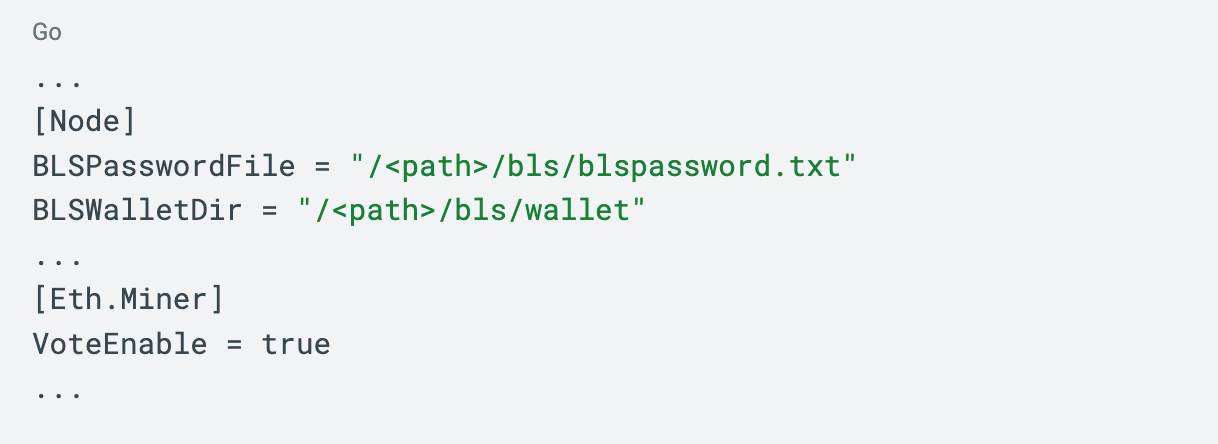
Enabling voting with your generated key
Alternatively, these parameters may be passed when starting the core-chain client:

Starting with the core-chain client
2.3. Update the Vote Address on the Core Staking Website
Navigate to the Core Staking website
Mainnet Site: https://stake.coredao.org/
Testnet Site: https://stake.test2.btcs.network/
Go to the Validator Listing page and connect your wallet to the website.
Mainnet Site: https://stake.coredao.org/validators
Testnet Site: https://stake.test2.btcs.network/validators
Click on the validator name to open the dedicated validator details page.
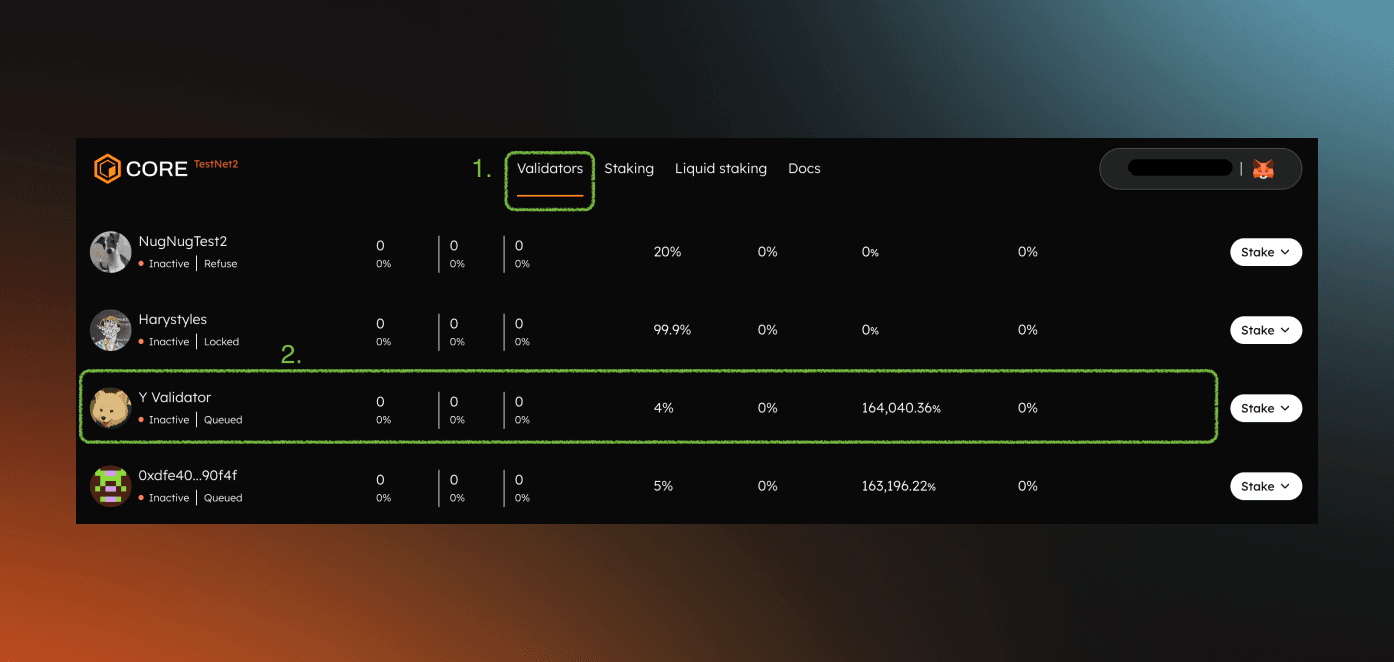
ste-2.3-1.png
Open the dedicated Validator page, click the menu (⋮) in the upper-right corner, and select “Update Validator.”
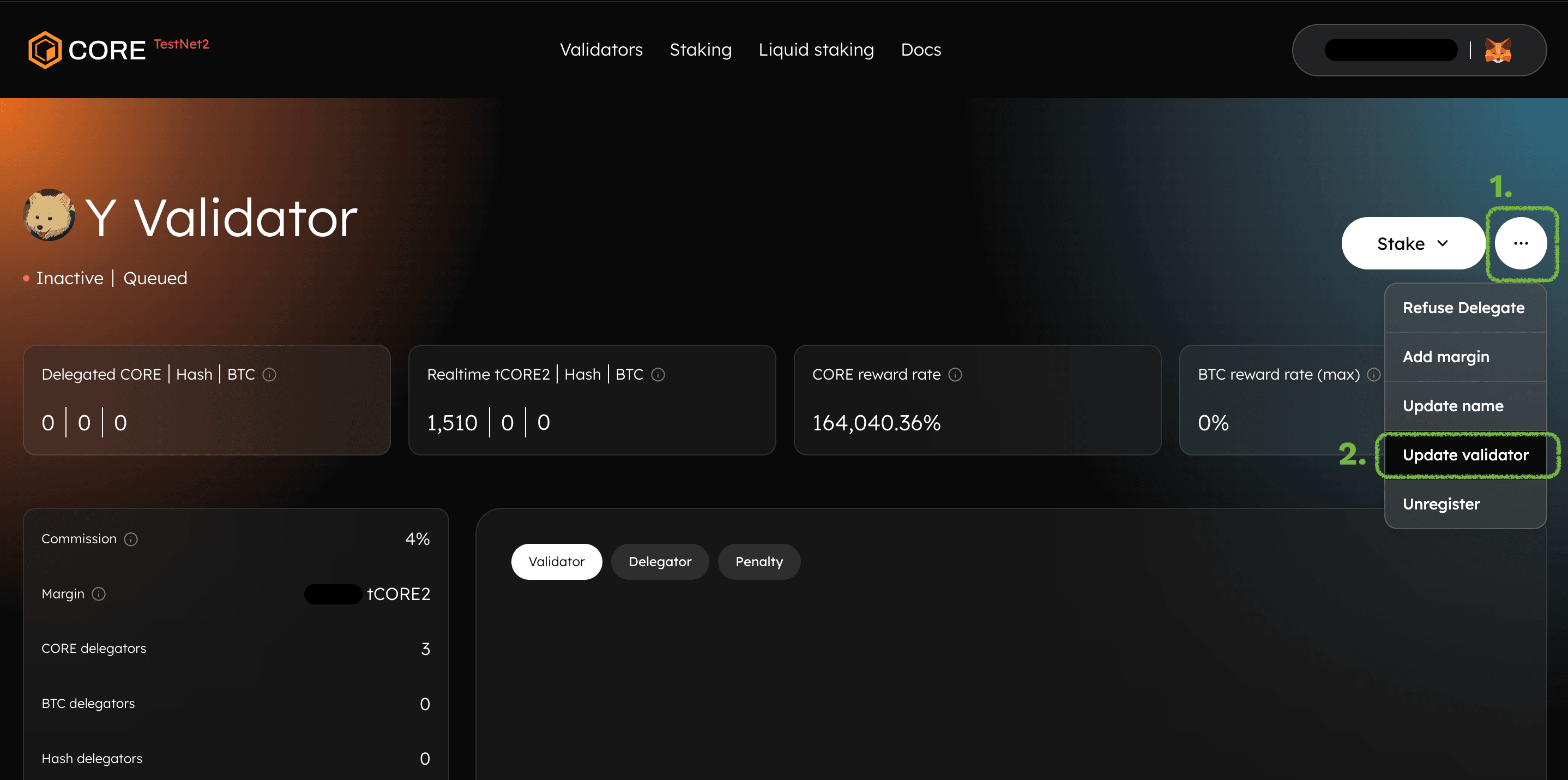
Y Validator
Enter your Vote address and click the “Update” button.
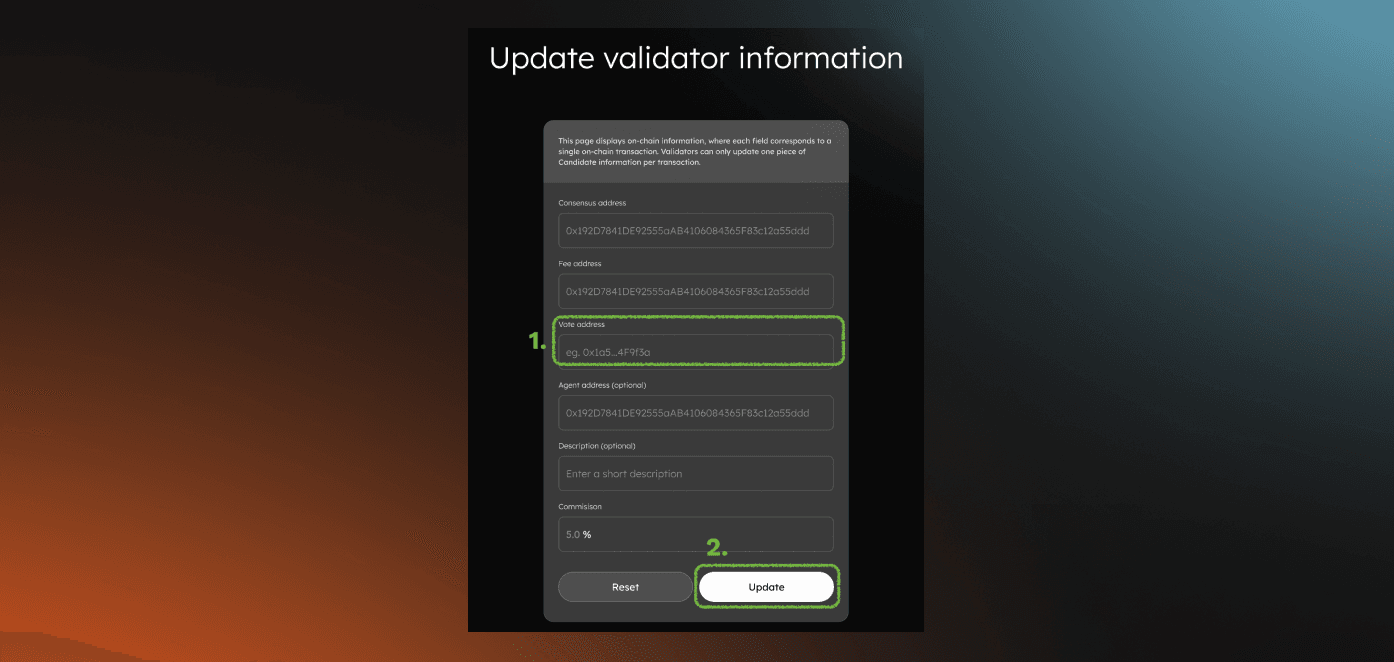
update-valdiator-info.png
Approve the transaction in your wallet to confirm the update.
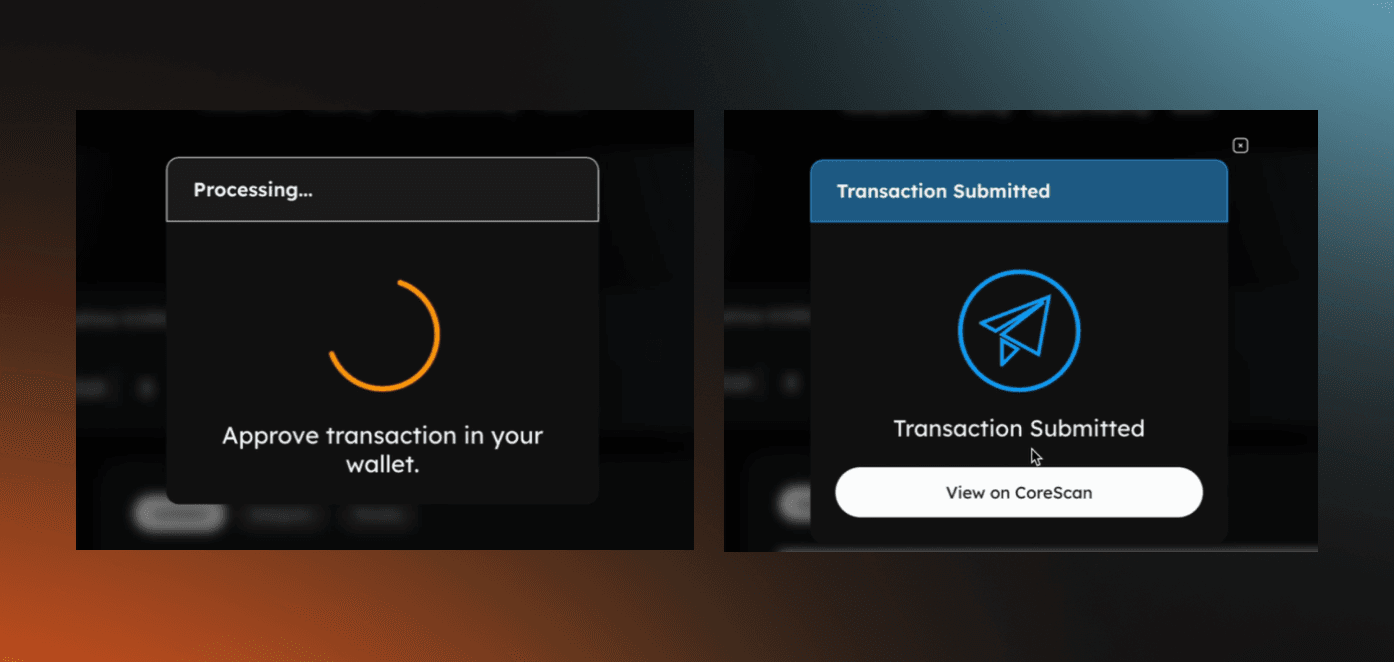
step-4.png
2.4. Update the Personal Module
If you are using the Personal module, please note that this module has been deprecated. There are two alternatives available:
- Use Clef to manage private keys. Refer here for more details.
- Unlock accounts using the --unlock command in geth startup.
What happens if a validator/full node fails to upgrade in time?
If a validator or full node operator fails to upgrade the node software on time, the node will not sync with the upgraded Core blockchain peer/validator nodes, and you will not be able to connect or send transactions. It is also essential to upgrade on time to continue smooth, uninterrupted operations.
Hardfork Resources
Latest Release: https://github.com/coredao-org/core-chain/releases/tag/v1.0.22